Last year in Bosnia and Herzegovina, negative trends were recorded in the collection of concession fees, as numerous concessionaires exploiting significant natural resources avoid paying already low obligations to the state. The Concession Register maintained by Transparency International in BiH shows that 704 concessionaires, for whom authorities provided data in 2024, paid about 17% less money into public revenue accounts. These same concessionaires owe over 9 million KM, which is not the final amount, as seven government bodies still do not provide data on concessionaire payments, while four bodies provided only partial information.
The lack of transparency in their operations opens up a huge space for corruption, and TI BiH has previously filed criminal charges against responsible individuals in the relevant ministries who avoided initiating legal proceedings and enforcement actions, thereby causing damage to the state. We note that proceedings against those responsible in the SBK government are still ongoing due to failures that led to the accumulation of debts for concession fees, and the Federal Prosecutor’s Office returned the case to the SBK prosecutor’s office following a complaint by TI BiH.
Poor collection is certainly influenced by the inconsistency of laws, lack of regulations, and non-transparency in record-keeping, so auditors in numerous bodies constantly encounter shortcomings. For example, the Audit Office of the FBiH found in the Herzegovina-Neretva Canton that the provisions of concluded contracts for the use of coastal marine waters and water resources for tourism activities were not consistently followed, as concessionaires did not make the annual current fee payments monthly as defined by the contracts. As a result, receivables based on concession fees in this canton are not recorded based on relevant documentation and at the time they were incurred, and short-term receivables are reported as over 900 thousand KM less than the actual state.
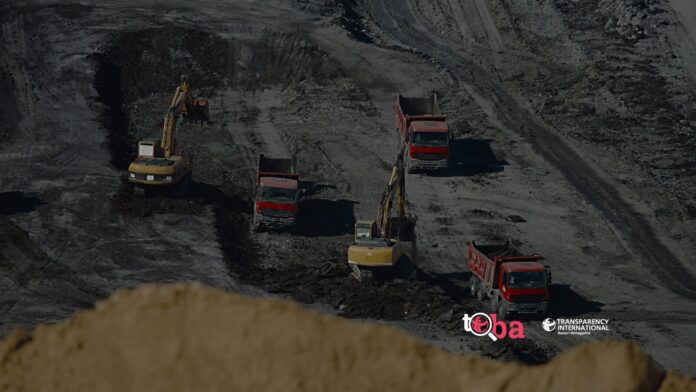
The Una-Sana Canton has 1.3 million in doubtful and disputed receivables, and an additional problem is that natural resources are being exploited without concluded concession agreements. As a result, concession receivables are not recorded in all cases, and auditors could not confirm that they are realistically stated. A similar practice of exploitation without concluded agreements has been present for years in the Republic of Srpska, with the most well-known case being the company “DRVO-EXPORT” Teslić d.o.o, which, despite strong public opposition, opened two mines, Bistrica and Bukova kosa.
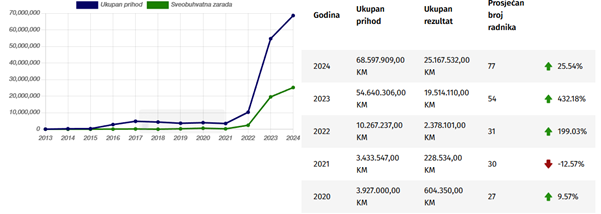
Concession agreements in these two cases were subsequently awarded, and according to data obtained by TI BiH from the PU RS, this company, owned by an SNSD councilor from Teslić, paid 19,860 KM in fees in 2023 and another 322,782 KM in 2024. On the other hand, the public has no insight into the economic benefits this company achieves from the exploitation of mineral resources, and its publicly available financial reports show that in the last two years, the company’s revenue has increased almost sevenfold, as well as the profit, which amounted to 25 million KM.
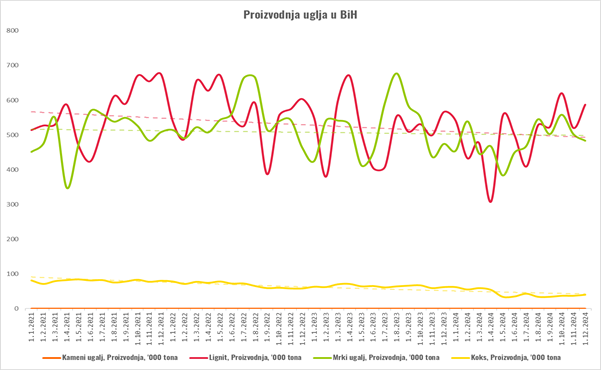
Coal exports from BiH have recorded significant growth in recent years primarily directed towards Serbia, and this was influenced by a significant increase in prices on the world market. This has also led to the opening of several new deposits outside standard procedures and concluded concession agreements, violations of numerous legal regulations, and public resistance.
Data from RS shows that the collection of fees for the use of natural resources for electricity production (by small hydropower plants in operation) has also decreased, from 381,159 KM in 2023 to 354,913 KM in 2024.
The total number of active SHP facilities, according to information from the relevant ministry, is 85, with 36 in commercial operation. Numerous environmental organizations have pointed out the significant environmental damage caused by these producers, while on the other hand, the collection of concession fees is quite low, as are other types of potential benefits that we have as a society as a whole.
Due to insufficient transparency in the procedures for granting concessions, supervision, and collection of public revenues, TI BiH has repeatedly warned of the need to allow the public to gain insight into the state of the concession area through the public publication of registers and complete data on the collection of concession fees.
TI BiH has been advocating for years for the harmonization of the legal framework at all levels of government in BiH with the Concessions Directive and other relevant European Union regulations. This would apply principles of transparency, prevention of conflicts of interest, and ensuring legal protection, which would enable the establishment of a unified electronic register, concession plans, and standardized methods for calculating fees.