Chinese companies in Bosnia and Herzegovina have been securing multimillion contracts for years, but behind the promises of investment often lie unfinished projects, hidden contracts, and rising costs ultimately borne by citizens. Instead of rapid infrastructure development, numerous arrangements have turned into examples of non-transparent public fund management and institutional circumvention.
Analysis of the relationship between Bosnia and Herzegovina and China shows that the majority of announced deals did not represent actual investments, but rather contracts in which domestic authorities assume the financial burden through budget funds, loans, and guarantees. At the same time, key documents are often unavailable to the public, such as commercial contracts, concession arrangements, and financing details.
China is now among BiH’s largest trading partners, but the relationship between the two countries is marked by a massive imbalance. According to available data, BiH imported goods from China worth approximately 1.8 billion euros, while exports to China amounted to only about 14 million euros. This means that for every euro of exports, BiH imports Chinese goods worth approximately 800 euros.
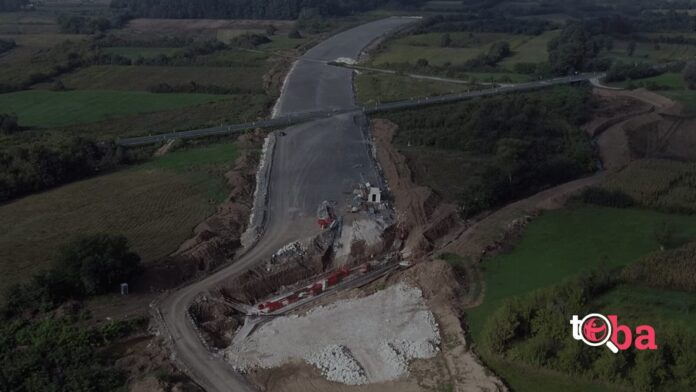
The most visible presence of Chinese state-owned companies has been recorded in Republika Srpska, particularly through infrastructure and energy projects. However, many of them have been stalled for years. The Banja Luka–Prijedor highway was announced as a major development project, but even after nearly eight years it has not been completed, while the cost has increased significantly compared to initial estimates. Financial details of the contract remain not fully disclosed to the public, although Transparency International has won several court rulings against the Ministry of Transport and Communications of Republika Srpska, which claims that disclosing these details would harm the business interests of Chinese partners.
A similar pattern is evident in the Brčko–Bijeljina highway project, as well as in hydropower projects such as Bistrica and Dabar, where authorities entered into commitments without full institutional approval or without publishing complete documentation.
One of the biggest failures remains the Block 7 project at the Tuzla Thermal Power Plant. Presented as a generational investment, this project ended without implementation after years of announcements and signed contracts, with serious risk of international arbitration and additional costs for BiH.
A particular problem is the fact that lower levels of government often conclude major deals before obtaining necessary approvals from state institutions, while approvals are issued retroactively. Such practice creates room for legal uncertainty, abuse, and shifting of responsibility.
The analysis shows that the problem lies not only with Chinese companies, but primarily in the weaknesses of the domestic system. Corruption, political fragmentation, lack of oversight, and hidden contracts create an environment in which foreign contractors can obtain privileged positions.
Therefore, key recommendations are focused on mandatory publication of all major contracts, independent oversight of infrastructure projects, stricter control of state guarantees, a registry of unreliable contractors, and strengthening the integrity of public procurement.
Citizens of Bosnia and Herzegovina have the right to know who receives multimillion contracts, under what conditions, and who bears responsibility when projects fail. Without complete transparency, every newly announced investment remains primarily a political promise, and only then a development opportunity.