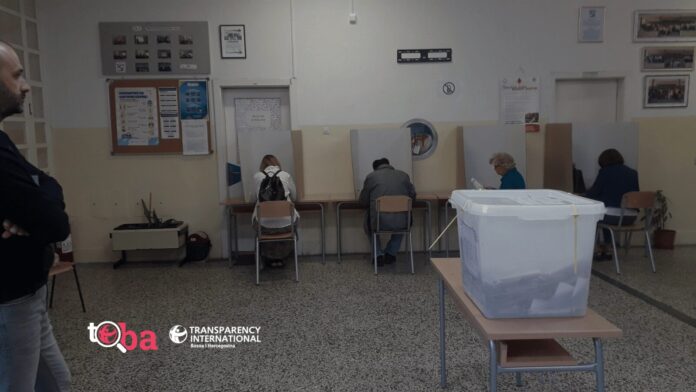
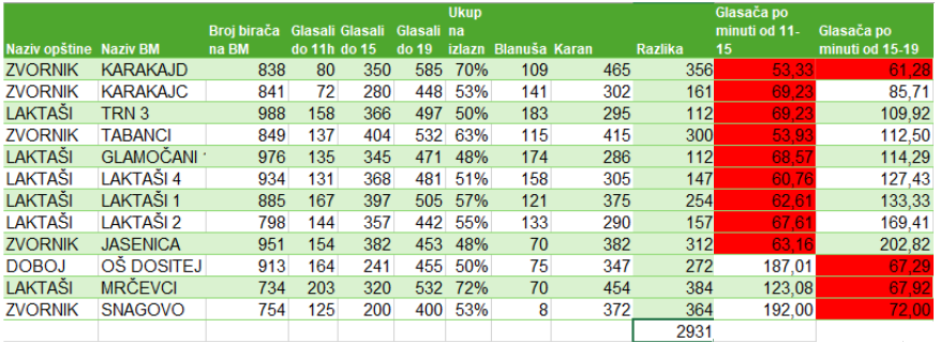
Reported turnout at two polling stations in Zvornik (Karakaj D and Tabanci) was such that, according to this data, one voter would have voted every 53 seconds from 11 AM to 3 PM, and according to official results, Siniša Karan received about 80% of the votes at both places. Data on official voter turnout at different intervals, which Transparency International BiH has meanwhile received from the Central Election Commission, indicates possible electoral manipulations following a similar pattern previously discovered and proven in numerous places.
TI BiH therefore called on the CEC for further investigation because the suspicious turnout of 50 seconds per voter was one of the reasons cited in the decision to annul the elections in Doboj in 2020.
This time at 11 polling stations in Doboj, Zvornik, and Laktaši, where Siniša Karan has a margin of over 2,900 votes, the average voting time in certain intervals was 50-70 seconds, and additional suspicion is raised by a sudden spike in turnout at some polling stations in the final hours of voting. In electoral forensics, suspiciously high turnout combined with unrealistic voting times is considered a serious indicator of possible electoral fraud, requiring further investigation.
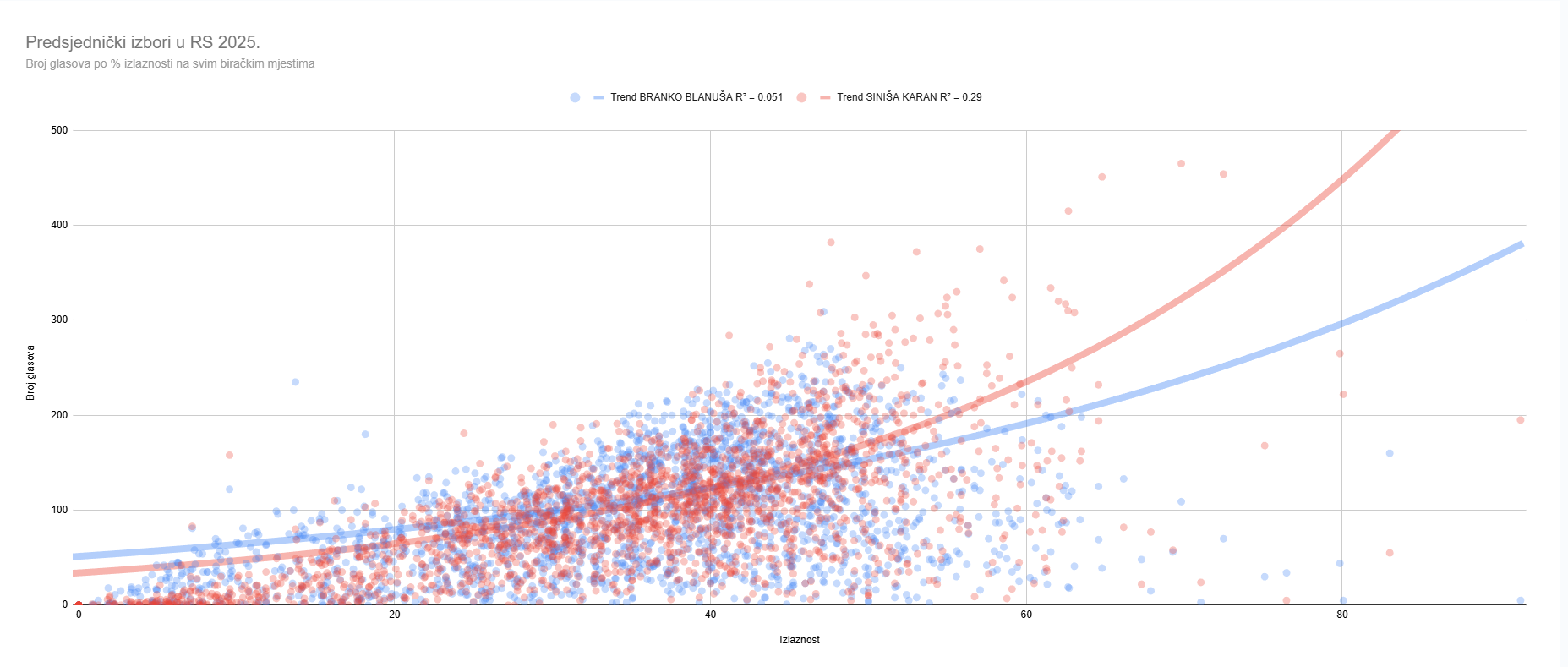
TI BiH previously called on the CEC to investigate suspicions of electoral manipulations and published an analysis of vote distribution in relation to turnout which shows an unnaturally high share of votes for the candidate who received the most votes at a turnout that is several times higher than average. At 40 polling stations where the SNSD candidate achieves an advantage of 70 percent or more, turnout is far higher than average, and additional suspicion is raised by new data on reported turnout at different intervals.
It should be noted that the CEC initiated proceedings ex officio due to suspicions that the rules of the electoral process were violated, and in recent days, CEC members have been presenting scandalous information about the extent of electoral manipulations. We remind you that 1,660 voters were discovered who allegedly voted and were signed, even though they do not have any valid personal documents.
The results of graphological analyses, which could clarify whether someone was mass-signing voters who did not vote, are yet to be announced. This pattern of altering the electoral will of citizens has already been proven in numerous court processes for previous electoral cycles.
It is important to emphasize that this process is still ongoing and that the election results have not been confirmed, despite the dissemination of a large number of false information that the electoral process is completed and that the CEC has declared a winner. Therefore, the CEC, despite numerous political pressures, should investigate all suspicions of electoral irregularities regardless of the fact that observers or polling board members did not enter objections to the electoral process in the records.
It is important to note that the phenomenon of trading polling boards by political parties was previously observed, and TI BiH warns that this has not changed even with the amendments to the law which introduced non-partisan presidents of polling boards and their deputies.
Furthermore, in numerous court proceedings for electoral fraud monitored by TI BiH, observers, in addition to not recording objections in the minutes, often testified that they saw nothing irregular even though it was proven that votes were massively added for voters who did not turn out to vote and even for those who had died before the elections and were not removed from the voter list. Thus, in the 2020 elections in Srebrenica, 20% forged signatures were also found, although 91 members of polling boards submitted statements that there were no irregularities and that no one exercised their voting right with invalid documents. At that time, among other things, the CEC determined that multiple persons voted on behalf of voters who did not turn out to vote and that they “had yellow stickers over identification documents” containing the information of the persons on whose behalf they were voting.
The discovered electoral frauds prompted numerous citizens to contact the CEC with inquiries and request information on whether someone voted on their behalf. At several recent sessions, such requests for access to information were rejected by the CEC without conducting a public interest test, explaining that compiling such information requires the work of a larger number of officials.
TI BiH believes that the topic of electoral manipulations and proving these occurrences is extremely important and that testimonies from citizens whose identities were misused can also help in this process.