The title reminds us of that old good sketch by the Surrealists about a factory producing nothing, but fortunately or unfortunately, reality has long surpassed any form of imaginative satire.
It has long been a common notion that a large part of the public sector in BiH has long lost any purpose and meaning of existence and that even if it were abolished overnight, at least half of the public institutions would go unnoticed by anyone alive. Of course, except for those who “work” there and receive a salary.
Similarly, the story that BiH is among the “best” in Europe in terms of corruption and that the semblance of combating corruption being attempted is actually a hilarious tragicomedy with elements of burlesque has been told countless times.
So, what else is there to add and write about? Well, even in such a well-known situation, boundaries can be pushed, absurdities made even more absurd, and the public mocked even more, faster, better.
For such an attention-worthy achievement, the institution called the “Republic Commission for Determining Conflicts of Interest” took care. Recently, in the National Assembly of RS, Obrenka Slijepčević, the president of this commission since its establishment in 2009, presented the commission’s work report.
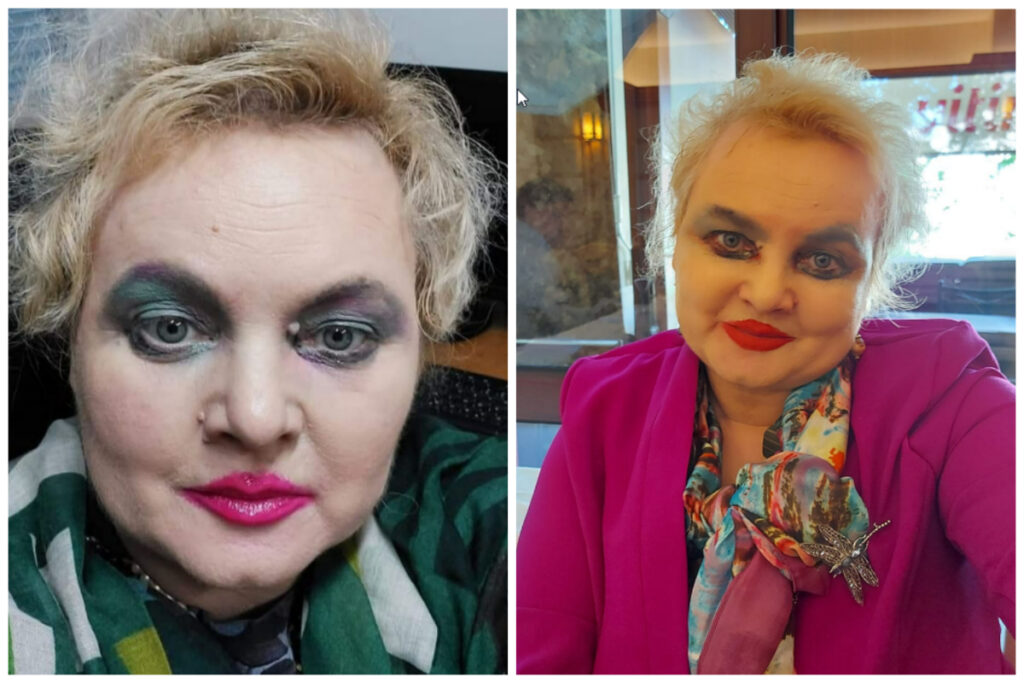
For Mrs. Sljepčević, well-known to the wider public due to her very striking public appearances, unrestrained by the narrow scope of authority her institution should deal with, it is actually unclear whether she is still the president of the Commission or not, as her successor has been elected, but this was contested by the decision of the Constitutional Court of RS.
But that’s certainly not the topic, because why burden ourselves with the status of President Slijepčević when, for example, it’s not clear who the president of the entity is. You already know the story, that there’s one who formally isn’t the president but actually is, another who is the vice president but authorized to be president, and then a third, who is acting president, although the institute of acting president as such is not recognized by the RS Constitution. But that’s a completely different topic, let’s return to the Commission and Mrs. Slijepčević.
What President Slijepčević presented to the NS RS under the item Report on the Work of the Commission for Determining Conflicts of Interest for 2024 is actually a very unusual document that is difficult to categorize by genre, as it contains elements ranging from existential questioning of what the actual competencies of the Commission are (chapter “Can the commission even impose sanctions?), through “intersectoral cooperation” (which sectors and about what, the reading audience was left deprived of that insight) and “integration of digital tools into meetings” (whether it’s just the mere installation of the Zoom app or AI in meetings, remained unresolved), to basic things like vision and mission in which determining conflicts of interest is not even mentioned.
But let’s leave genre definitions aside and look at the results. On page 8, it states “The Commission successfully resolved 90% of cases thanks to intensive communication, timely analysis, and application of legal provisions.”
Excellent!
Let’s see if there are more detailed indicators? On page 18, it states that in 2024, “the number of resolved conflicts of interest is 75%!” So not cases, but “conflicts of interest,” this already leans towards metaphysics and political philosophy, but let’s leave that aside for now. Let’s see if there are more indicators. On the same page, it further states that in 2024, the Commission issued 5 decisions, 2 conclusions, 23 opinions.
So, thirty (30) acts, in words and numbers.
Let’s see how that looks from the perspective of performance. The Commission has seven members, the annual number of working hours is approximately around 2000, when we multiply that by seven, which is the number of commission members, we get 14,000 working hours that the Commission has at its disposal annually.
So, if we simply divide the number of working hours 14,000 by the total number of acts – 30 that the commission issued, we arrive at the indicator that it took an incredible 466 working hours to produce one act. But to be completely objective, the commission also held 12 sessions, so let’s assume the sessions were substantive and lasted 5 hours each, that’s a total of – 60 hours.
We are still left with a very striking average of 400 hours for the production of one act by the commission.
But, let’s not forget; the conclusion of the report states that a total of – no less than – 100% (!!!) of cases were resolved, thanks to efficient communication with parties and the application of laws!
But, since we’re already talking about efficiency, we must take into account audit reports. The last publicly available audit report for the Commission is the one for 2020 when the commission received a qualified opinion. As the basis for the qualified opinion, the Main Audit Office states:
- The Republic Commission for Determining Conflicts of Interest in the authorities of the Republic of Srpska did not adopt a Public Procurement Plan;
- The applied coefficient for calculating the salary of the president of the Republic Commission for Determining Conflicts of Interest in the authorities of the Republic of Srpska is higher than the coefficient determined by the Decision of the Administrative Commission of the National Assembly of the Republic of Srpska;
- The president of the Republic Commission for Determining Conflicts of Interest in the authorities of the Republic of Srpska was paid other personal income (allowances) according to decisions not approved by the Administrative Commission of the National Assembly.
Oh, could it be that the president herself was in a conflict of interest. So, all in all, in a situation where it’s almost harder to find a public official who isn’t in a conflict of interest, RS spends about 400,000 KM on the commission’s work according to the latest available audit report, and you’ve seen the results, and we certainly recommend you see for yourself and read the report because it’s really worth it, especially for those with sadomasochistic tendencies.
So, what is the solution or where to go next? RS would be cheaper to not have the Commission and save 400,000 KM considering that all those who intend to be in a conflict of interest are already in a conflict of interest, and the Commission itself is in a conflict of interest according to the audit report. Thus, the greatest contribution of the Commission for Determining Conflicts of Interest would be to make a decision on its own abolition, due to the complete irrelevance of its existence.