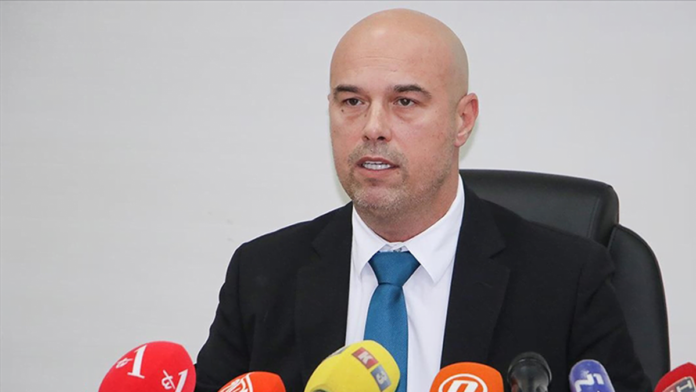
The RS Commission for Deciding on Conflict of Interest suspended proceedings against Milan Tegeltija, advisor to the President of Republika Srpska and head of FK Borac, because the National Assembly of RS amended the law that effectively legalized the conflict of interest situation he was in. What’s completely absurd is that the Commission is not applying the law that was in force when Transparency International in BiH filed complaints against Tegeltija and five other football club leaders from the BiH Premier League.
According to the provisions of the Law in force at that time, it was forbidden for any official to head an association that receives more than 100,000 KM in budget funding, and Tegeltija simultaneously holds the position of advisor and club president, which has received over 2 million marks from the RS budget. Justifying himself to the media, Tegeltija interpreted that he “is not in a conflict of interest” because he doesn’t receive a salary for his work at the club, and shortly after that, the NSRS amended just one article of that law and exempted officials who don’t receive compensation for their work in associations from the prohibition.
This law was adopted at the end of September this year, and afterward, the Commission made a decision to suspend proceedings against Tegeltija, citing precisely these law amendments that only came into force in October.
“Given the mentioned legal provision, the reasons for conducting this procedure have ceased, and therefore it is suspended,” states the Commission’s decision.
Besides the fact that this Commission is not applying the positive legal regulations that were in force at the time the proceedings were initiated, it remains questionable through which procedure it was determined that the head of FK Borac does not receive any compensation for work in the club, so TI BiH will file an appeal regarding all of this.
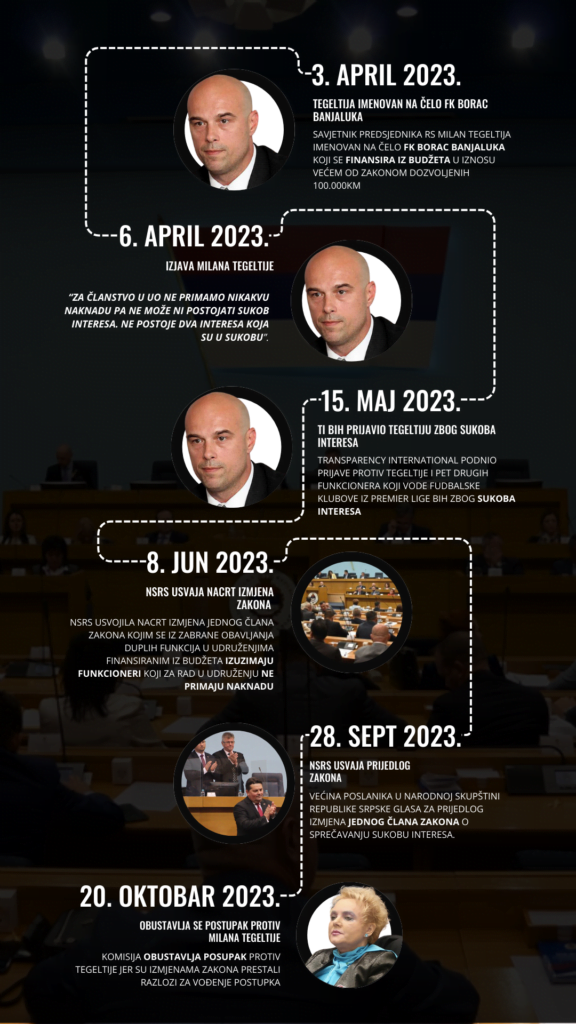
It is particularly problematic that laws in Republika Srpska are being tailored to individuals, and TI BiH has already warned that this law will legalize the situation in which Tegeltija finds himself, as well as many other officials who simultaneously lead NGOs that are funded from the budget.
The aim of this law was to prevent officials from distributing budget money to their own associations and private enterprises, so the appearance of conflict of interest should never have been reduced to just receiving a salary. This provision will enable the unhindered extraction of public money through NGOs connected to the authorities, while at the same time, all citizens’ associations that are not under government control and have independent funding are being attempted to be declared as “foreign agents.”