Taxpayers in Bosnia and Herzegovina could pay 28 million marks for the procurement of ID card forms that were contracted but not used. This was warned by the Audit Office of BiH Institutions in the Report on the Procurement and Functionality of Personal Documents where it states that there is a risk of interpreting a provision of the contract signed with the company MUEHLBAUER ten years ago by the Agency for Identification Documents, Records and Data Exchange of BiH (IDDEEA).
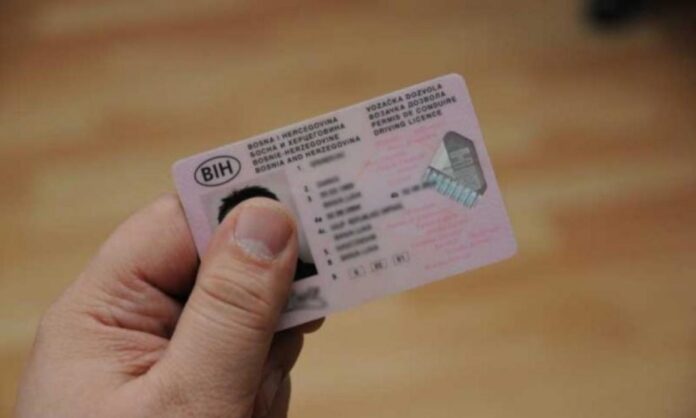
The contract, as stated by the auditor, defined that BiH would procure 5,000,000 ID cards and 2,000,000 driver’s licenses, but only 65% of ID cards have been used in the past period, while the last contracted quantities of driver’s licenses were withdrawn at the end of last year.

As the ten-year contract expires next year, there is a danger that BiH will have to pay for 1.7 million unused ID cards, because in the report, auditors explain that Article 3 of the Contract provides for payment of the total contracted quantity of personal documents, so that upon completion of the contract, there is a risk regarding the interpretation of this provision.
There is still a risk of paying 28 million KM for 1.5 million unrealized ID cards because IDDEEA has not resolved with the supplier the issue of completing the existing Contract from the aspect of the contracted obligation to purchase total quantities, states the Audit Office’s report.
If such a thing happens, the management of IDDEEA must bear responsibility for concluding a harmful contract, as it is unclear why IDDEEA committed to paying for quantities that are not delivered. Namely, for such procurements, where it is not possible to predict exact quantities over a long period, a framework agreement is usually concluded, and then individual annual contracts define the dynamics of realization and pay only for the quantities that are consumed.
The Audit Office warned back in 2015 that this could happen and that trends were such that significantly fewer quantities of ID cards were being delivered than contracted. Because of all this, the Ministry of Civil Affairs of BiH formed a Working Group in 2016 to analyze the possible harmful consequences of this contract, especially those related to the obligation to pay for total contracted quantities. The analysis proposed a conclusion to form a special working group tasked with negotiating with the supplier and trying to make changes to the contract that could cause damage to the BiH budget, but this issue was never resolved.
An additional problem with this contract is that the last quantities of driver’s licenses were withdrawn at the end of 2021, which is why IDDEEA had to allocate an additional 800,000 KM for the procurement of 200,000 forms. The contract was again awarded to the same bidder MUEHLBAUER through a negotiated procedure, with the explanation that no one else can meet the technical characteristics and that citizens could be left without driver’s licenses. TI BiH reported the case to the Public Procurement Agency, which submitted all documentation in this procedure to the BiH Prosecutor’s Office “due to potential violation of the Public Procurement Law and the possible existence of elements of a potential criminal offense.”
After that The Office for Consideration of Complaints annulled this procurement because the French company Thales DIS France SAS complained about IDDEEA’s decision to award the contract to MUEHLBAUER without public bidding. The French company claims that it has the ability to meet the technical characteristics of the required driver’s license forms, as well as that there are other suppliers on the market who can meet these conditions.
TI BiH has been warning for years that IDDEEA favors the company MUEHLBAUER, awarding it contracts without public bidding. Thus, the contract for the procurement of passports in March 2017, worth 9.4 million KM, was also awarded to this company through a negotiated procedure, and it was also claimed then that citizens would be left without personal documents because the OCR annulled several open procedures by accepting complaints from dissatisfied bidders.
Also, for the initial procurement of ID cards in this case, the Audit Office of BiH Institutions concluded it was disputable that the procurement of personal documents worth over 100 million KM was awarded without a conducted tender, which led to investigations, and the former director of IDDEEA was arrested, but the procedure was subsequently suspended.