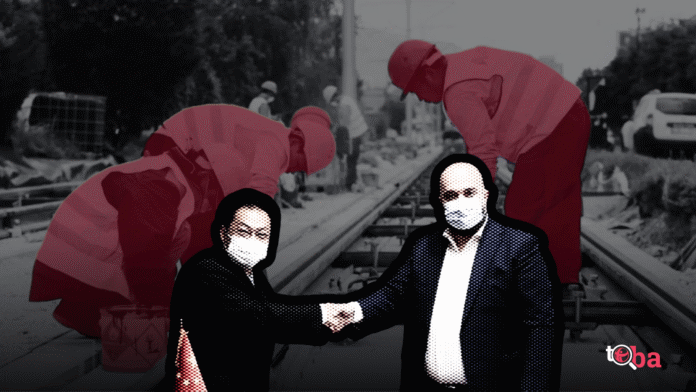
The Ministry of Transport of Sarajevo Canton has once again refused access to the contract for the reconstruction of the Marijin Dvor–Ilidža tram line, its annexes, and the bid from the Chinese consortium selected as the contractor, despite the Cantonal Court in Sarajevo having previously upheld the lawsuit filed by Transparency International in BiH and annulled the Ministry’s initial decision, ordering that the request be reconsidered.
In its new decision, the Ministry claims to have assessed the content of the documentation, identified the existence of confidential commercial information, and conducted a public interest test, in which it was determined that the interest of the Chinese bidder continues to take precedence over the interest of BiH citizens in knowing the key details of a contract for an infrastructure project financed by public funds.
The reasons cited for withholding the documents include, among others, the structure and price calculations, cost accounting methodology, risk assessment, and certain technical and organizational solutions whose publication would, in the Ministry’s view, enable competitors to gain insight into how the contractor formulates bids and organizes its operations.
At the same time, the Ministry acknowledges that there is significant public interest in information about this infrastructure project, including the contract value, financing method, implementation deadlines, and obligations of the contracting parties. Nevertheless, it concluded that this interest is not sufficient to grant the public access to the complete contract, annexes, and bid.
The Ministry also rejected the possibility of partial disclosure of the documentation, explaining that commercially sensitive data are found in a large number of contractual provisions and that their removal would cause “the remaining content to lose its meaning and context.”
TI BiH has filed an objection to this decision, arguing that even after the Cantonal Court ruling, the Ministry has not properly balanced the private commercial interest against the public interest in having insight into how contracts are awarded and funds are spent on one of the largest infrastructure projects in Sarajevo Canton.
In its objection, TI BiH points out that this is a major public infrastructure project of international character, while the funds for reconstruction were secured through a loan from the European Bank for Reconstruction and Development—all circumstances that should have influenced a higher degree of transparency and protection of the public interest.
Particularly contentious is the manner in which the Ministry conducted the public interest test, as it states that the documentation contains no facts that would indicate that its withholding conceals illegality, abuse, or unauthorized use of public funds.
The public interest includes the ability of citizens, media, and civil society organizations to verify how public contracts are awarded, how funds are spent, and whether institutions have acted responsibly and transparently, which is why access to documentation can enable the discovery of possible irregularities and is not limited to merely confirming those already known.
This case is only the latest example of an increasingly common trend in Bosnia and Herzegovina, where domestic institutions and public authorities choose to protect the commercial and business interests of foreign companies instead of the interests of their own citizens who pay for expensive infrastructure projects.
One such example is the persistent refusal of the Ministry of Transport and Communications of Republika Srpska to publish the Financial Model of the concession contract for the construction of the Prijedor–Banja Luka highway, citing protection of the Chinese investor’s commercial interests.
These two cases, along with many others, reveal a troubling problem of growing lack of transparency in major infrastructure contracts and the willingness of domestic institutions to, under the guise of protecting legitimate business interests, deny the public’s right to know under what conditions contracts are concluded, projects are financed, and initiatives that citizens pay for are implemented.